




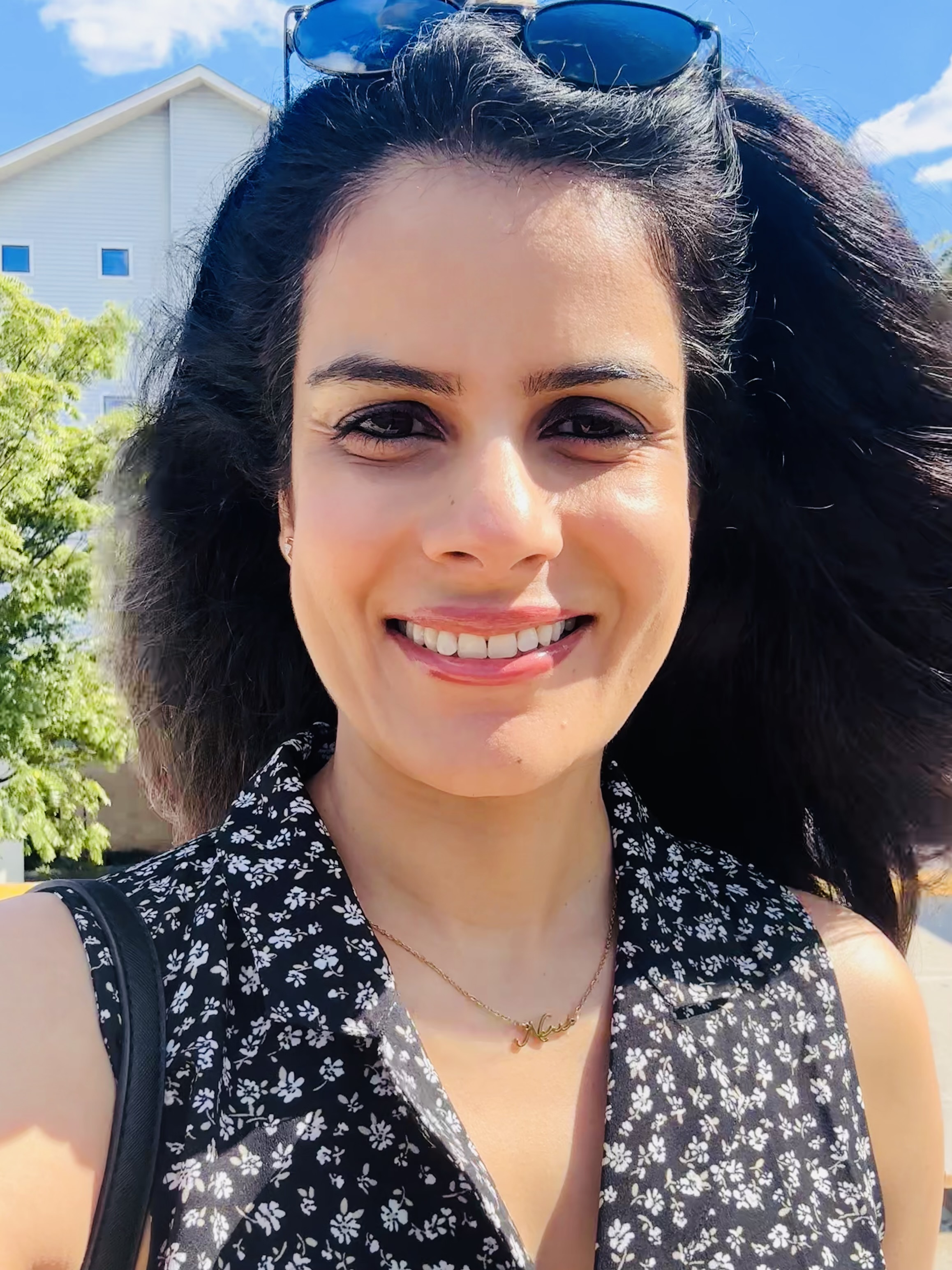
Alka Bishnoi, Ph.D. profile and information
Learn more about Alka Bishnoi, Ph.D.
- Assistant Professor
- Director of the Neuroscience of the Mobility (NeuroMOB) Lab
176 Kinesiology Building
Google Scholar
Alka Bishnoi, Ph.D. LinkedIn
Download CV
NCBI Bibliography
Short Bio
Dr. Alka Bishnoi is an Assistant Professor and the director of the Neuroscience of Mobility (NeuroMOB) Lab. Her research examines the relationships among cardiovascular health, cognition, mobility, and motor function across the lifespan. Her work integrates neuroimaging, physiological, and biomechanical approaches including functional near-infrared spectroscopy (fNIRS), heart-rate variability, gait analysis, and dual-task paradigms to better understand how cardiovascular and cognitive factors influence mobility and functional independence in adults with and without disorders. Dr. Bishnoi is particularly interested in developing innovative, accessible paradigms that improve cognitive-motor function, reduce fall risk, and promote healthy aging. She is an active contributor to professional societies, including the Society of Neuroscience, and the Neural Control of Movement.
More bio information
Education
Ph.D. in Kinesiology and Community Health University of Illinois at Urbana-Champaign2021
M.S. in Rehabilitation SciencesUniversity of Illinois at Chicago2017
M.S. in Exercise PhysiologyKent State University2014
B.S. in Physical TherapyDelhi University 2011
Professional Experience
Assistant Professor, School of Kinesiology, Department of Physical Therapy, Auburn University (August 2026 â Present)
Assistant Professor & Research Content Coordinator, Department of Physical Therapy, Kean University (August 2025 â August 2026)
Assistant Professor & Cardiopulmonary Content Coordinator, Department of Physical Therapy, Kean University (September 2022 â August 2025)
Visiting Postdoctoral Scholar, Department of Kinesiology and Community Health, University of Illinois at Urbana-Champaign (January 2022 â August 2022)
Innovation
Research Interests:
⢠Cognitive-motor interactions and dual-task performance
⢠Cardiovascular health and cognitive function
⢠Mobility, gait, balance, and fall risk
⢠Healthy aging and functional independence
⢠Exercise and rehabilitation interventions
⢠Neural mechanisms underlying motor and cognitive function
⢠Cardiopulmonary rehabilitation
⢠Wearable technology and physiological monitoring
⢠Neuroimaging and multimodal assessment, including functional near-infrared spectroscopy (fNIRS)
