




Project Description
Jada Kohlmeier and Steven Brown (Political Science) were awarded a $2 million grant from the U.S. Department of Education to conduct virtual professional development with 40 secondary social studies teacher for 3 years in under-resourced classrooms. Kohlmeier and Brown will lead a project staff of 10 teacher educators who will lead 10 Lesson Study teams. These teams of four social studies teachers will develop problem-based inquiry lessons that engage students in civic reasoning to prepare them to tackle complex self-governance problems. Teachers will participate in 50 hours of summer work and 30 hours of video implementation, reflection and lesson revision during the academic year.

Co-Project Directors
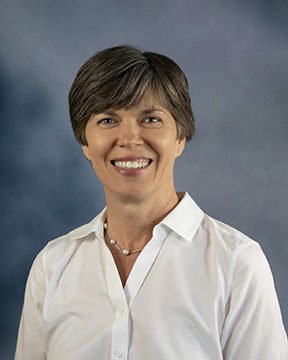
Humana-Germany-Sherman Distinguished Professor
Program Coordinator, Secondary Social Sciences Education
Department of Curriculum and Teaching
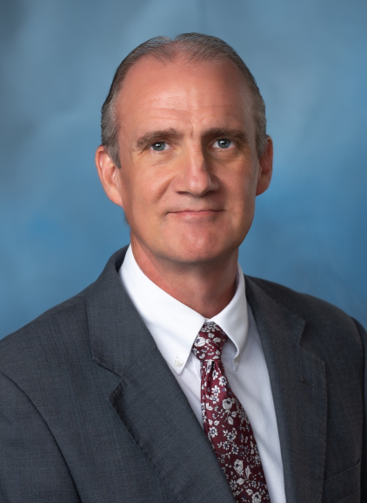
Morris Savage Endowed Chair in Political Science
Program Director for the College of Liberal Arts’ Law and Justice Program
Department of Political Science
Topics and Professional Development Logistics
Participants (7-12 Grade Social Studies teachers) will be immersed in the historical, social, political, and legal components of three landmark Supreme Court cases as they discuss these questions:
Participants will examine the Bill of Rights and the Fourteenth Amendment from a legal and historical context. They will also learn about the Supreme Court’s evolving approach to applying the Bill of Rights against state and local government action.
Participants will study the case of Gomillion v Lightfoot, which outlawed racial gerrymandering. We will then discuss the challenge of applying the principles of that case to more modern forms of political gerrymandering and the role of the courts in determining whether or not congressional districts are drawn fairly. Participants will experience “You Be the Justice” lessons which apply the principles outlined in Gomillion to modern cases.
Participants will examine the case of the Scottsboro Boys from Powell v Alabama that established the right to effective counsel and then learn about the legacy and application of this right in subsequent cases. Participants will experience a lesson in which we deliberate what is required for “effective counsel?”
Participants will examine NAACP v. Alabama against the historical background of the Montgomery Bus Boycott and the state of Alabama’s demand that the NAACP produce its membership list. They will also participate in a “You be the Justice” lesson examining the complex application of this fundamental right to government efforts since the September 11th attacks to identify those associated with terrorist organizations and, more recently, with hate groups.
Teachers will be put into grade-level/subject focused teams to develop a sequence of problem-based inquiry lessons focused on a civil right or liberty pertinent to their own curriculum. Each team will be facilitated by a Lesson Study Team Leader with experience in the problem-based inquiry approach. Teams will collaboratively research and build a lesson each summer and then participate in Lesson Study. In Lesson Study the team videos the implementation of the collaboratively built lesson in order to reflect upon the lesson and make revisions to the lesson in order to increase student learning. The teams will do this process twice each year, revising a lesson until it is strong and encourages deep analysis of complex issues. Teachers will be filming themselves implement the lessons and reflecting with their teammates and team leader about how the lesson could be adjusted to increase student learning.
This is a 3-year professional Development project that blends content and pedagogy toward teachers developing problem-based inquiry lessons for their own classes focused on a civil right or liberty.
June
Each teacher participant will receive readings and video recorded presentations from Drs. Brown and Kohlmeier. Participants will spend 15 hours learning about the Supreme Court case and civil right/liberty as the focus for that year
July
Participants will participate in a 35 hour, 5-day virtual synchronous institute July 15-19, 2024. Dates for 2025 will be July 14-18 and 2026 will be July 13-17. Participants will need high-speed internet and a web camera for participation.
Academic Year
Participants will film themselves (using a Swivl camera provided) and reflect on their lesson implementation with their team leader via Zoom and the Swivl website. During the fall, one volunteer on the team will have invite the teacher team to watch their lesson implementation so the team can critique the lesson (not the teacher). The team will analyze the procedures, materials, scaffolds, assessments, and rubrics, to determine how the lesson was encouraging deep learning. The team will meet via Zoom to make revision suggestions for a spring implementation of the lesson. Each spring a different volunteer will film their implementation for the team to review using the same process. The final lesson may be featured on the PIH website for use by other teachers and teacher educators. Teachers will dedicate 30 hours of PD to this academic year process.
Application and Eligibility
Application deadline: 11:59 p.m. CST, March 25, 2024
Date Applicants will be notified whether or not they have been selected to participate: April 19, 2024
Deadline to accept or decline our offer: April 26, 2024
The C.L.E.A.R. Thinking Project is designed for full-time 7-12th grade social studies teachers who teach in public schools. Selection will prioritize teachers who teach in high-needs districts/schools or at least primarily teach high-minority students.
Participants must be United States citizens, residents of U.S. jurisdictions, or foreign nationals who have been residing in the United States or its territories for at least the three years immediately preceding the application deadline. U.S. citizens teaching abroad at U.S. chartered institutions are also eligible to participate. Foreign nationals teaching abroad are not eligible to participate.
Participants may not be delinquent in the repayment of federal debt (e.g., taxes, student loans, child support payments, and delinquent payroll taxes for household or other employees).
Applications will be evaluated on the following criteria:
- Effectiveness and commitment as a teacher/educator.
- Intellectual interests as they relate to the topic of the professional development.
- Special perspectives, skills, or experiences that would contribute to the program.
- Evidence that participation will have a long-term impact on applicant’s teaching.
Applicants will Provide:
- Demographic questions
- Two-page (max) resume
- Four essay questions:
- What is the purpose of teaching social studies? How should students be different as a result of your social studies course? (250 words max)
- Describe your current challenge(s) in teaching Civil Rights and/or constitutional issues to your students. (250 words max)
- Provide an example of how would currently teach Civil Rights and/or constitutional issues/cases and how you are attempting to address the challenges you stated in #2. (500 words max)
- How would participating in this 3-year professional development project on problem-based inquiry and civil rights/liberties improve your students’ learning? (250 words max)
Lesson Study Team Leaders
Ph.D. Candidate, Auburn University
After graduating from the University of Virginia, Ms. Andrews taught high school social studies for 6 years in Loudoun County, Virginia, where she mainly taught AP United States Government and AP United States History. As a leader of both teams, she promoted an environment of collaboration that focused on project-based learning, critical thinking, and skills that students could apply to the real world after high school. In addition to being part of the CLEAR Thinking Project, Ms. Andrews is currently a doctoral student and intern teacher supervisor at Auburn University.
Associate Professor, Secondary Social Studies Education, University of Alabama College of Education
Dr. Callahan taught secondary students for 14 years, practicing the craft of social studies instruction the way he promoted it in presentations, workshops, and scholarly writing. He earned his Ph.D. from Auburn University and became a teacher educator to advance a research program that includes educative curriculum materials, problem-based historical inquiry, aesthetic texts, and international education. Dr. Callahan has authored or co-authored more than 30 journal articles, conference proceedings, book chapters, and books, including Teaching for Student Learning and Those Who Can Teach. He has encouraged a more dynamic relationship between research and practice through opportunities afforded him by a National Technology Leadership Initiative Fellows Award, a Jacobs Educator Award, a Gilder Lehrman Alabama History Teacher of the Year Award, and a Literati Award from Emerald Publishing. Dr. Callahan is also a Japan Fulbright Memorial Fund Fellow, a Fulbright Specialist, and will soon complete a Fulbright US Scholar award with the University of Prishtina in Kosovo.
Adjunct Professor, Secondary Social Studies Education, Auburn University
National Board Certified Teacher, Auburn High School
Ms. Halperin teaches AP US History and US History 11 at Auburn High School and has been teaching in Auburn City Schools since 2015. Ms. Halperin’s deep love for history and the inventive ways she uses to communicate that history to her students create a classroom full of discussions, debates, investigations, and real-world dilemmas. Ms. Halperin engages her students in public history through their research and preservation of the history of Baptist Hill Cemetery, a historic Black cemetery in Auburn. As a 2023 Teacher Fellow for the David Mathews Center for Civic Life, she prepares her students to become civic-minded participants in America’s twenty-first century democracy. Ms. Halperin was nominated Gilder Lehrman’s 2022 Alabama History Teacher of the Year and she is a James Madison Fellow for the state of Alabama.Teacher, Samford Middle School
In addition to his current teaching responsibilities, Dr. Jones supervises MEd students’ action research projects in which they work together to develop and implement novel solutions to problems in their classrooms. He also supports MAT student-teachers during internship experiences with in-person and video observations accompanied by reflections. Additionally, he teaches undergraduate and graduate students the process and skills needed to engage in authentic and research-based Professional Learning Communities (PLCs). Prior to his appointment at LaGrange College, he served as a graduate assistant and lesson study team leader for the Teaching American History grant, Plowing Freedom’s Ground (PFG), at Auburn University.Assistant Professor, University of Alabama
Mr. Lewis taught U.S. Government, geography, and Georgia Studies for four years at the high school and middle school levels in Columbus, GA. During his time as a classroom teacher, a few roles in which he served included student council sponsor, robotics coach, and wrestling coach. He is currently a PhD candidate at Auburn University, where he serves as a University Provost and Research Fellow. Mr. Lewis has given presentations at local, state, and national conferences regarding best practices when teaching controversy within the social studies. His research interests include the pedagogical practices of Black men teachers and teacher-coaches, teaching with documentary film, and Black History Education. Mr. Lewis led one of the Lesson Study teams in the Citizens Fighting for Civil Rights project and worked with one participant who agreed to film their implementation of their lesson and conduct responsive teaching video reflection. Mr. Lewis contributed to the research presentation at the American Educational Research Association meeting in 2023.
International Baccalaureate Teacher, Alpharetta High School
Dr. Phillips is teaching US History, IB Global Politics, and IB Theory of Knowledge at Alpharetta High School in Alpharetta, Ga. Dr. Phillips has eight years of high school teaching experience in suburban Atlanta and completed his doctoral degree at Auburn University in social studies education. His dissertation told the story of four U.S. Civics and Government teachers teaching politics during the fall 2020 presidential election cycle. He supervised interns and taught undergraduate social studies education methods courses, additionally Dr. Phillips has presented lessons on the Gomillion v Lightfoot case and gerrymandering at the Alabama, Georgia, and National Council for the Social Studies Conferences. Dr. Phillips led one of the Lesson Study teams in the Citizens Fighting for Civil Rights project.
Teacher, Auburn High School
Ms. Reese teaches US History 11 and US Government at Auburn High School. Since beginning her teaching career in 2020, she has sought to engage students in civic issues and critical thinking. She recently completed her master’s in social science education at Auburn University where she focused on political and legal history as a part of the James Madison Fellowship. One initiative that she is passionate about is her approach to senior government classes. Each 9 weeks, students do a deep dive into the provisions of the Bill of Rights and landmark cases by creating podcasts that explore the balance between government power and individual liberty. Madison hopes to continue to learn strategies that will help her students grow into confident, caring participants in our government.
Ph.D. Candidate, Auburn University
Mr. Summerlin's current responsibilities include supervision of intern teachers for Auburn University in the community schools. Formerly a 10th grade Social Studies teacher at Auburn High School, Mr. Summerlin has taught United States History and AP European History. As a classroom teacher, he was a member of a team that developed strategies to better help English Language Learners in a general education pathway. His masters research focused on Culturally Responsive Teaching for ELLs in a social studies context. He was the 2020 James Madison Fellow for the state of Alabama.
Associate Professor, Social Sciences Education, Auburn University
Dr. Tirado taught high school for 9 years, including 3 years at a diverse arts high school. He is the Associate Director of the Persistent Issues in History Network, conducting professional development in numerous settings focused on civic reasoning and using local history to develop critical analysis of history narratives. Throughout his teaching tenure at Auburn, he has led the 9th Grade World History faculty at Auburn Junior High School in Lesson Study, where they have transformed the midterm assessment to authentic assessment, their lessons on World War II, and Latin American Revolutions. He also has experience with integrating constitutional issues into the history curriculum as part of the Yale New Haven Teacher’s Institute where he developed a unit on the legacy of the 14th Amendment under the direction of Professor James Foreman, Jr. Dr. Tirado’s research focuses on the relationship between curriculum and belonging in a multicultural society and how immigration status also plays a role in our classrooms and other learning spaces. His research has appeared in the Journal for Social Studies Research and many books about social studies and for teachers.
